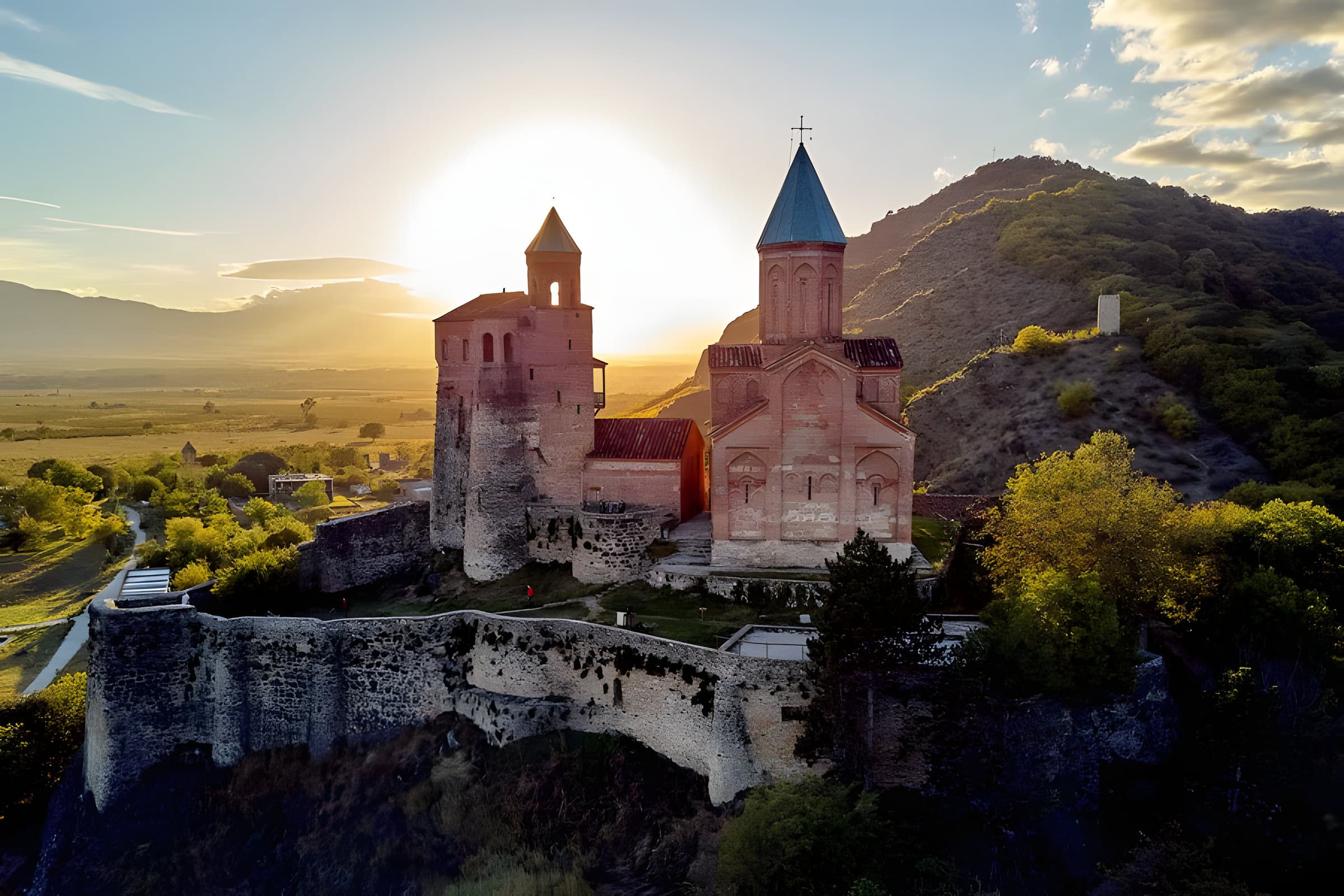
Kakheti Private Wine Tour
Four days in Kakheti with the people who make the wine, staying at Nekresi Estate and Ruispiri's biodynamic vineyard.
4 days / 3 nights 2–4 guestsEasy
Travel guide
Kakheti is Georgia’s wine cradle, about two hours east of Tbilisi: the Alazani Valley, hilltop Sighnaghi, old monasteries and family cellars where wine is still made in clay qvevri. This is what I tell guests before their first tasting, and the places I take them.
By Jimmy Malania, licensed Georgian guide since 2011 · Updated
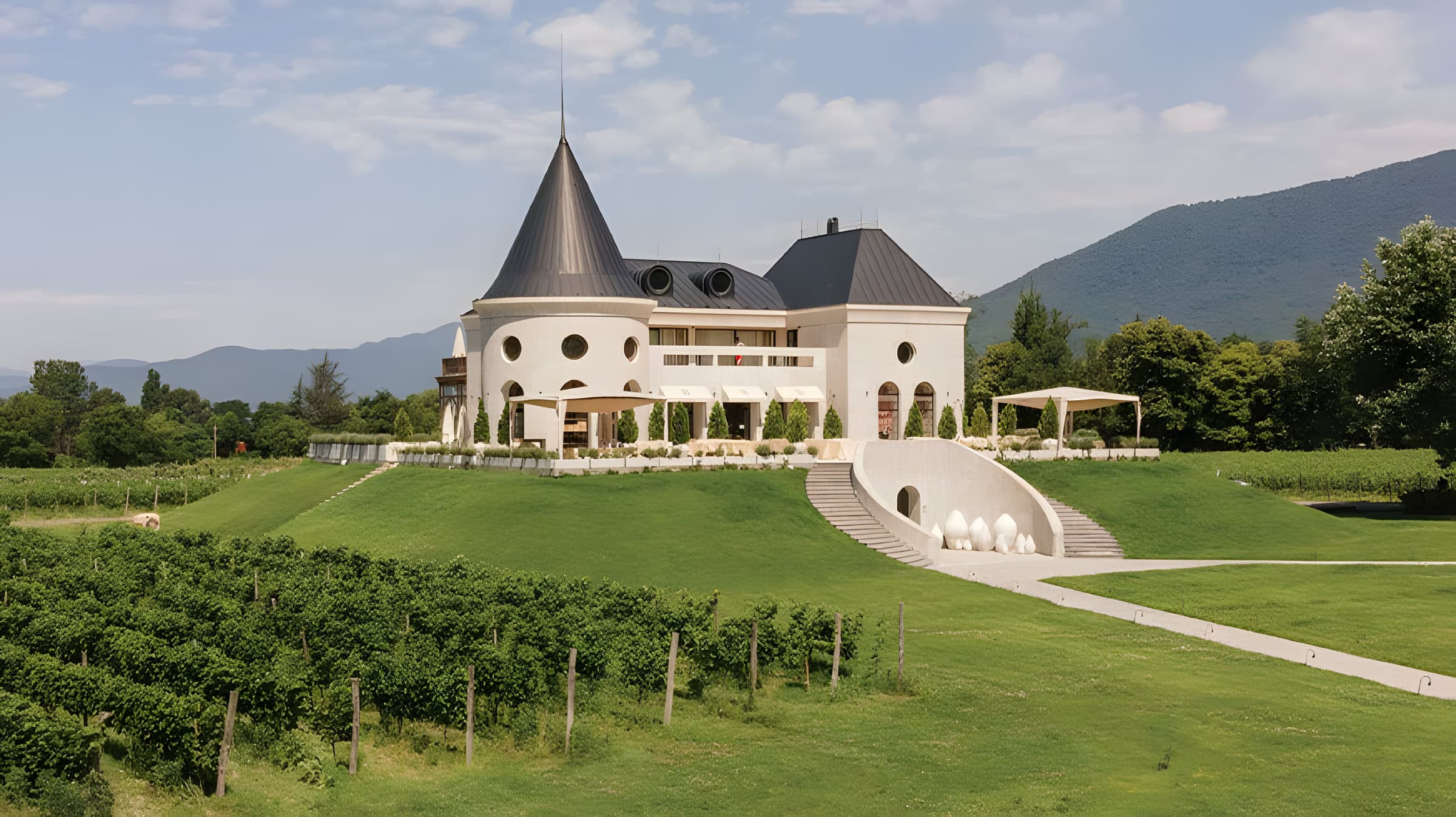
Georgia has been making wine for about 8,000 years, and much of it is still made the old way: in qvevri, large clay vessels buried in the ground. The grapes ferment naturally, without added sugar, water or anything artificial. The method is on UNESCO's list of Intangible Cultural Heritage.
The part that surprises most people is the white wine. In a qvevri, white grapes often ferment with their skins, so the wine comes out amber, with more texture than the whites you know. Ask the winemaker to pour a qvevri white and a European-style white from the same grape, side by side. It's the quickest way to understand the difference.
Wine here belongs to the table. At a supra, the traditional feast, the tamada (the toastmaster) leads the toasts: to family, to friendship, to the people who aren't there. You'll taste the wine better if you taste it like that, with food and time.
Georgia has more than 500 native grape varieties, most of which never leave the country. You don't need to know them all. Start with these four:
On our Kakheti tour we also go looking for the rare and forgotten varieties: the small family and biodynamic cellars are where you find them.
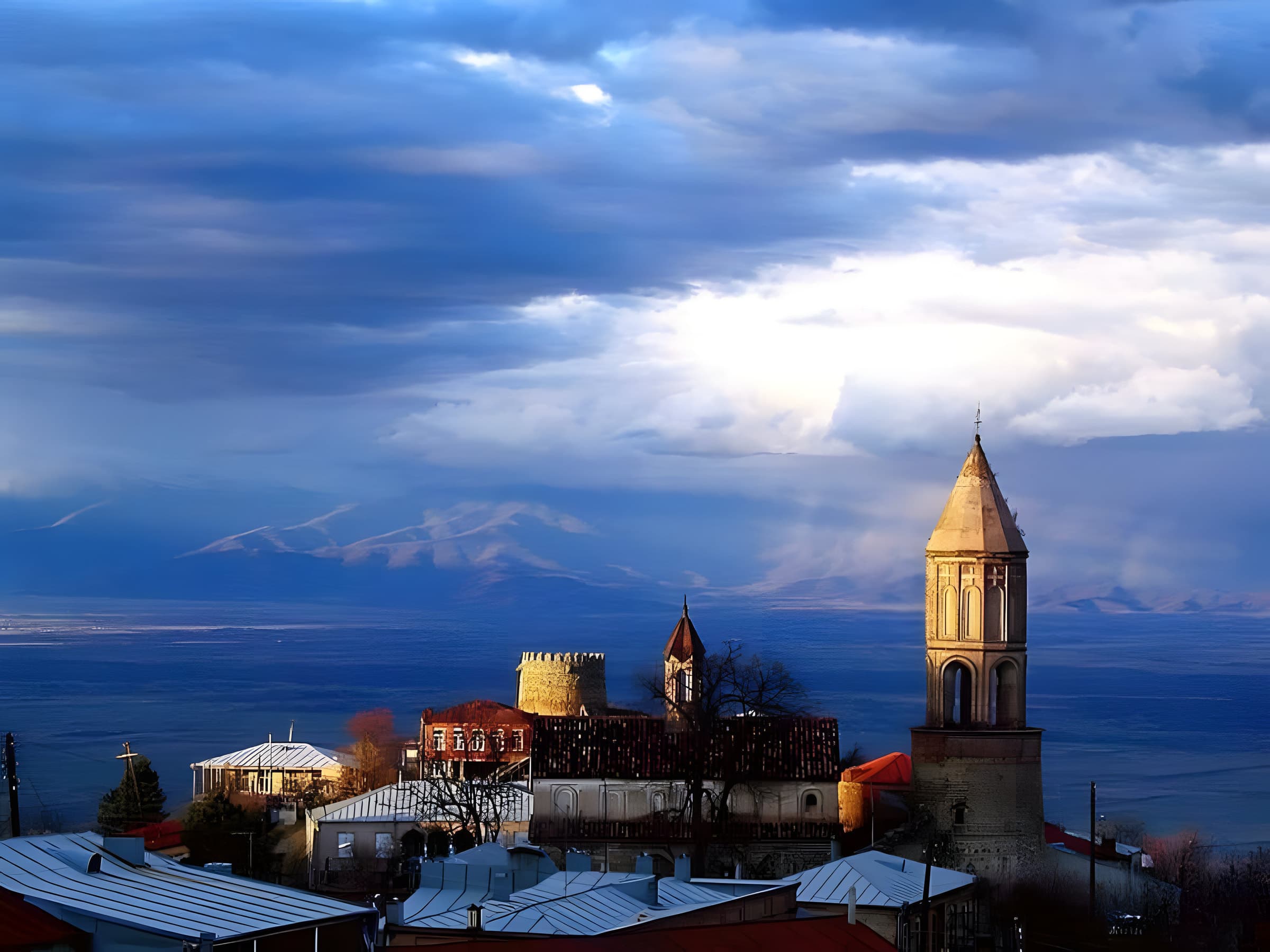
Sighnaghi is the hill town everyone photographs: cobbled streets, the old town walls, and views across the Alazani vineyards to the Caucasus. It sits at about 800 m, about two hours' drive from Tbilisi, and people call it the "City of Love".
Just below the town is Bodbe Convent, with the grave of St. Nino, who brought Christianity to Georgia. On the first day of our Kakheti tour we walk Sighnaghi, then taste at Nekresi Estate and cook a traditional Georgian meal with the host.
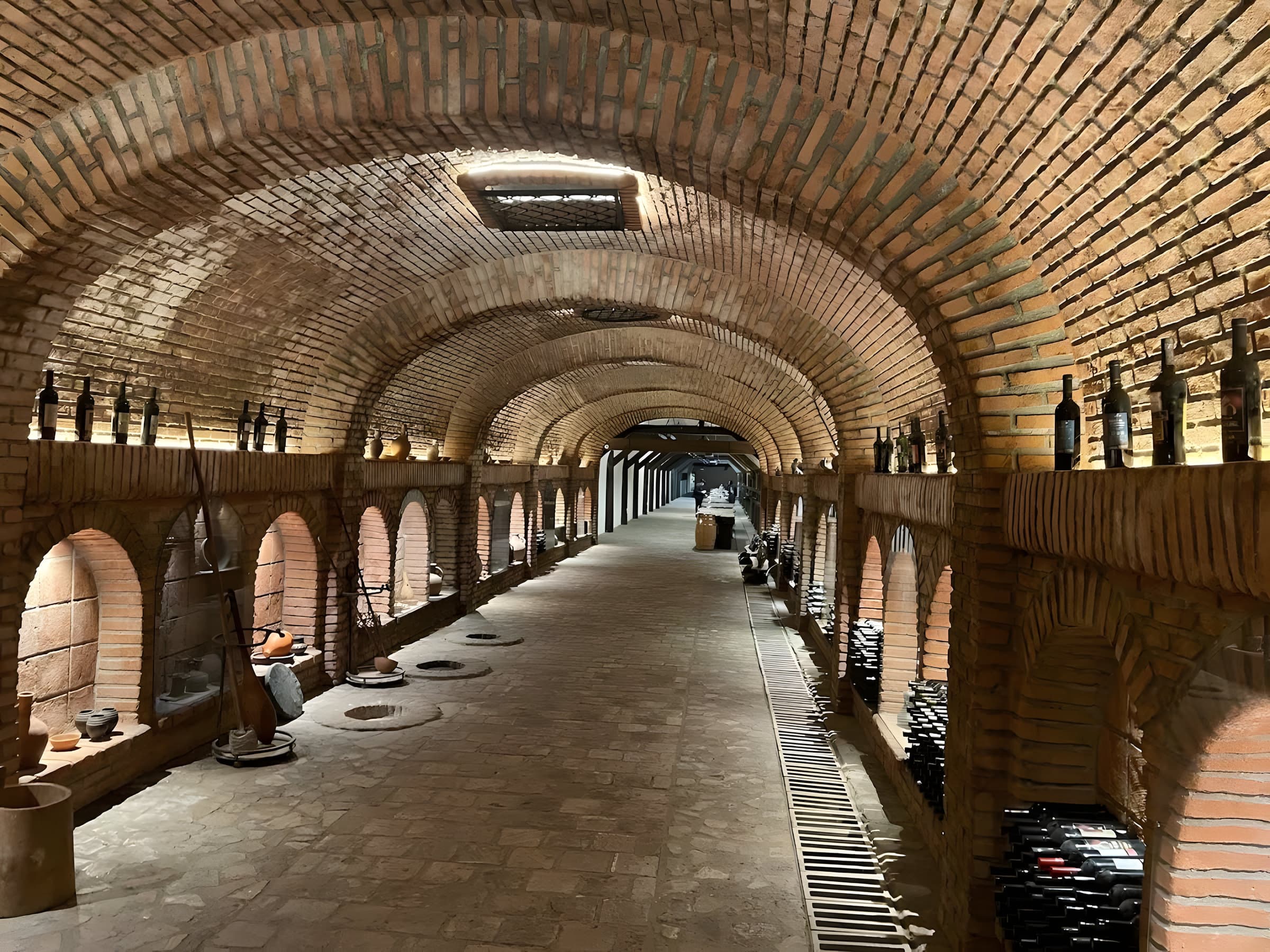
The Khareba Wine Tunnel is a long tunnel cut into the mountain, where the wine is stored at a cool, even temperature all year. Inside you see traditional and modern winemaking side by side, then taste.
It's the most polished stop of the trip, and I put it on the same day as Ruispiri, a small biodynamic vineyard where you meet the winemakers and sit down at a Georgian table. The two together show both ends of Georgian wine.
Wine and faith grew up together in Kakheti, and the old churches show it.
These are working churches: women cover their hair and wear a skirt, and men wear long trousers. A light scarf in your bag makes it easy.
Kakheti is at its best from April to October. September and October are the grape harvest, rtveli, and the liveliest time in the wine villages. The tour also runs from November to March, so a wine trip is possible all year. The best time to visit Georgia page has the rest of the country, month by month.
Our Kakheti Private Wine Tour is four days, because tasting properly takes time. If you only have an evening, the wine tasting in Tbilisi is five Georgian wines with an English-speaking wine expert. And to take Kakheti home, the Georgian Wine Box is 3 to 12 bottles chosen by a WSET sommelier, delivered free anywhere in Tbilisi.
Four days in Kakheti with the people who make the wine, staying at Nekresi Estate and Ruispiri's biodynamic vineyard.
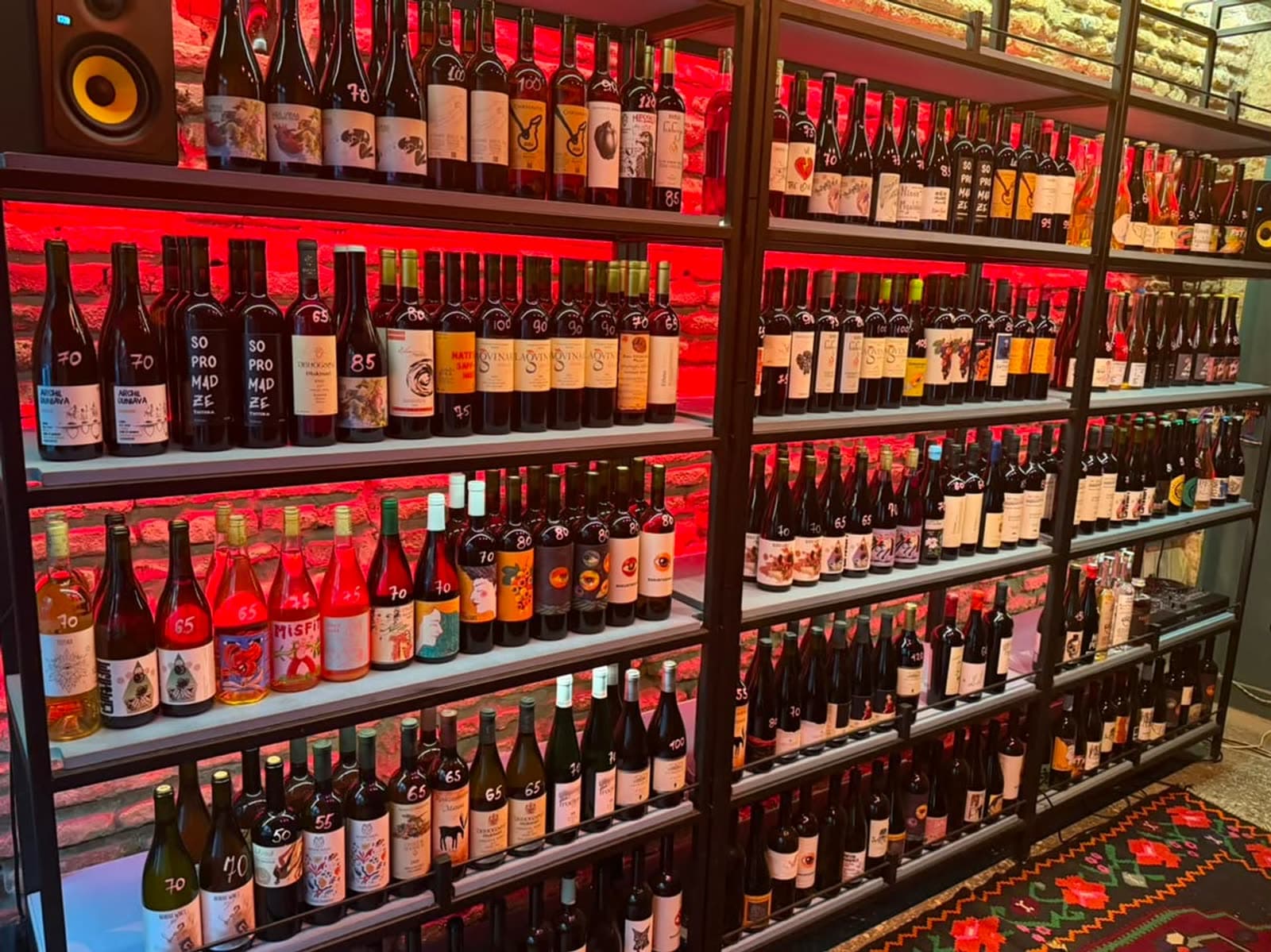
Five Georgian wines in central Tbilisi, tasted with your group only.